How to Water Newly Planted Trees and Shrubs
Your Professional landscaping has been installed, and now you have some new plantings! Your new trees and shrubs need proper watering in order to ensure their success. While they establish, they need consistent watering to avoid stress. Our #1 suggestion is to have an irrigation system installed. This will eliminate a lot of worry on your part and a lot of work too. You won’t have to drag around hoses and set up sprinklers. The irrigation company will set it all up for you and teach you how to run the controls. But let’s say you don’t have an irrigation system. Here’s a few pointers.
Note: The following suggestions may vary depending on your soil type, sun or shade, wind exposure and recent rainfall. So, please just use these suggestions as a guideline. Your professional landscaping plan will have taken into account sun, shade, soil, etc. Please be diligent and careful to water correctly!
How often?
For newly planted trees and shrubs within 1-2 weeks after planting, water daily. Within 3–12 weeks after planting, water every 2–3 days. And after that, water weekly until established.
How much water?
When watering new trees, use approximately 1–2 gallons of water per inch of stem caliper at each watering. Make sure that when you did the planting that you put a ‘berm’ of soil around the root zone that will hold the water and keep it from running off. Make sure you consider the type of plant (if it is moisture loving or if it prefers ‘dry feet’) and the type of soil you are planting into. If the soil has a lot of clay, water will absorb more slowly, so apply at a slower rate. If the soil is sandy, you may need to increase the amount and frequency of watering.
Apply Mulch
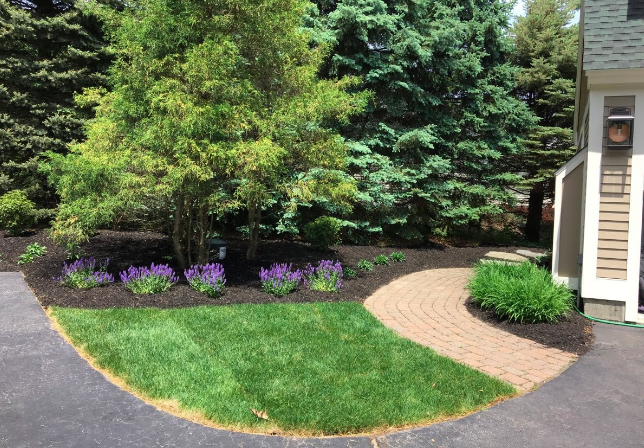
Make sure you’ve removed any grass in the root zone. You won’t want the competition for water and nutrients. In the disturbed area, apply 3” of mulch. This will help keep water from evaporating too quickly, and keep weeds from being able to establish so readily. You will also accomplish keeping the lawn mower away from the trunk and avoiding damage that way.
A good test
You do not want to let your plants get either too dry or remain wet for too long. If you’re unsure if it’s watering time, try pulling mulch away to get to the soil surface, and stick your finger all the way in to the soil. If, at the tip of your finger, it is spongy wet, do not water. If it feels fairly dry, it’s probably time to water.
For more information, there are always good sources to refer to. You can inquire with your landscape installation company, and with your local irrigation company.
Another great resource is your local University extension service.
You will definitely want to keep your professional landscaping looking like a professional job. And, of course, watering your new plants properly is part of what professional landscaping requires for professional results.
Happy planting! Happy watering!!